
Flat and foam roofing in Phoenix and across Arizona.

Low-slope and flat roofs are everywhere in Arizona — on commercial buildings, patio covers, additions, and modern homes. We install, repair, and recoat TPO, EPDM, modified bitumen, and spray polyurethane foam systems.

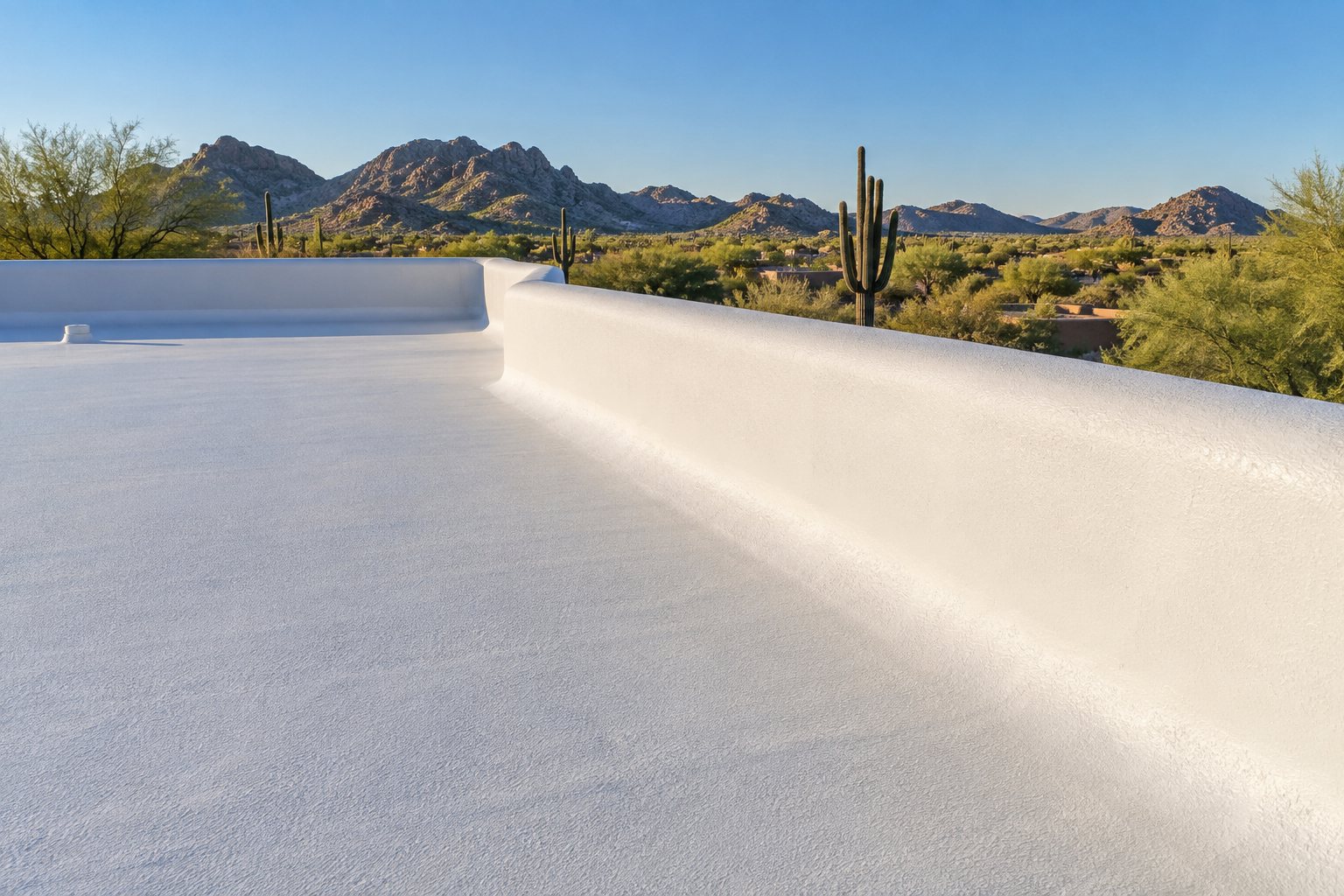
White-coated low-slope roof at a parapet edge, desert beyond

Ponding water, membrane failure, and foam recoats

Flat roofs in Arizona face unique challenges — standing water after monsoons, UV breakdown of membranes, and thermal expansion stress. If you're seeing ponding, bubbling, or cracks in your flat roof system, it's time for an inspection before the damage spreads.

TPO, EPDM, modified bitumen, and spray foam

Each flat roof system has different strengths. TPO is energy-efficient and weldable. EPDM is durable and cost-effective. Modified bitumen handles foot traffic well. Spray polyurethane foam (SPF) provides insulation and seamless coverage. We'll recommend the right system for your building and budget.

Drainage, UV protection, and energy efficiency

Flat roofs in Arizona must handle sudden monsoon downpours and intense UV exposure year-round. Proper drainage slope, UV-resistant coatings, and reflective surfaces aren't optional — they're essential. We design every flat roof system with Arizona's climate as the starting point.

01

Survey the existing system

We inspect the membrane, drainage, penetrations, and substrate to understand what you're working with.

02

Recommend the right system

Based on building use, budget, and condition, we recommend repair, recoat, overlay, or full replacement.

03

Install or restore

Whether it's a foam recoat, TPO overlay, or full membrane replacement, we handle the work with minimal disruption.

04

Verify drainage and finish

We test drainage paths, seal penetrations, and confirm the system is watertight before we leave.

Lifespan: How long does a flat roof last in Arizona?

Service life depends on the system, installation, exposure, drainage, and maintenance. TPO, EPDM, spray foam, and modified bitumen each have different inspection and upkeep needs, and Arizona's UV exposure can accelerate wear. We explain the maintenance plan for the system we recommend.

When does spray foam need to be recoated?

Spray foam roofs need periodic recoating to protect the foam from UV degradation. If you're seeing exposed foam, discoloration, or small cracks, it's time. Recoating is significantly cheaper than replacing the entire system.

Ponding: Is standing water on my flat roof a problem?

Standing water after rain can signal drainage problems and contribute to roof deterioration. Depending on the roof, drainage improvements may include tapered insulation, scuppers, or internal drains.

Do you work on commercial flat roofs?

Yes. Most of our flat roof work is commercial — office buildings, retail centers, warehouses, and multi-unit properties. We coordinate with property managers to minimize tenant disruption and work around business hours when needed.

Need a flat roof inspection, foam recoat, or full membrane replacement? Start here.