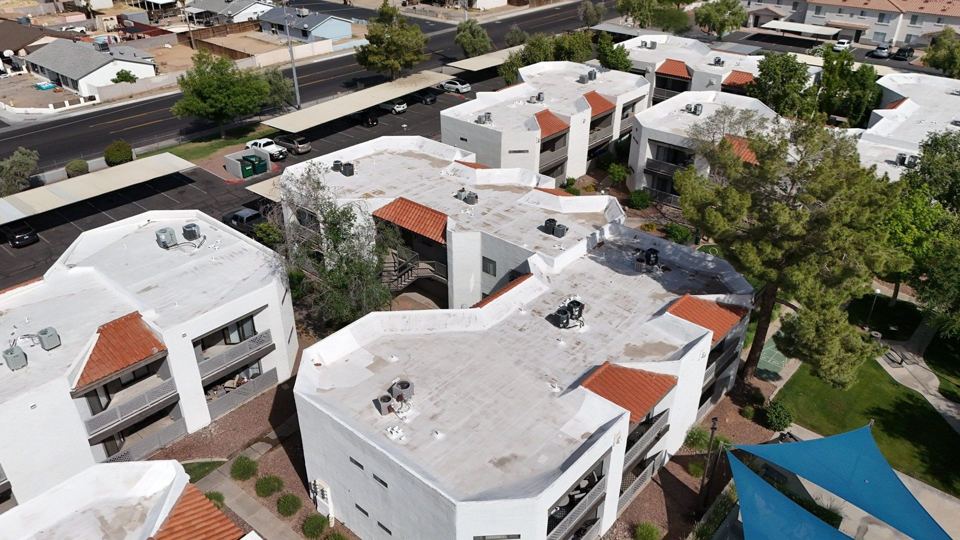
Arizona monsoon roof preparation
Plan an inspection before storm season so there is time to address existing wear. A roof can look intact from the street while flashing, drainage or the material beneath the surface needs attention.
What to include in the inspection
- Flashing and penetrations: Check transitions around vents, skylights, chimneys and HVAC equipment for gaps, lifted edges and deteriorated sealant.
- Valleys and drainage: Look for debris, displaced tile and blocked gutters or scuppers that can obstruct water flow.
- Roof covering: Record cracked or shifted tiles, missing shingles and visible coating wear on flat or foam roofs.
- Interior signs: Note ceiling stains or other visible evidence of water entry, including where and when it appeared.
Keep a dated condition record
Save ground-level photos of each side of the home, existing stains and visible damage, along with prior repair records. Ask for a written inspection report with photos and recommended next steps. These records help compare conditions over time; they do not by themselves establish storm causation or insurance coverage.
Make your own observations from a safe location. Leave roof access, flashing repairs, coating work and tarping to qualified professionals; do not climb onto a wet or storm-damaged roof.
Already had a storm? See what to document next. To discuss inspection availability and any fee, contact Platinum.