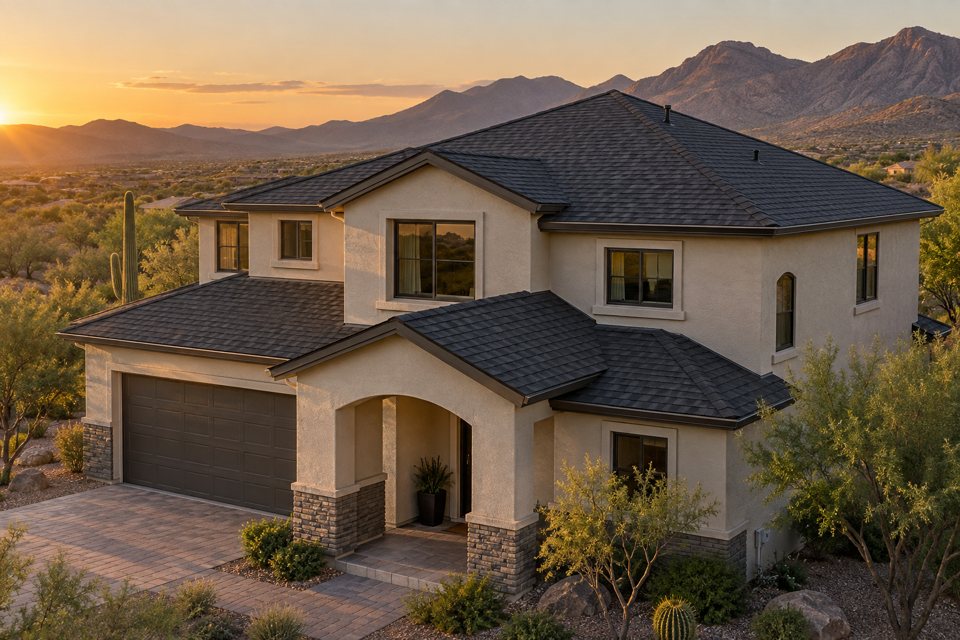
Fifteen to twenty years is the inflection point for most Chandler homes
The wave of construction that built Chandler's major subdivisions used 3-tab shingle and mid-grade tile that was never meant to go indefinitely. If your home was built between 1995 and 2010, there's a good chance your roof is approaching the end of its warranted life — or already past it. A single inspection tells you exactly where you stand before a small problem turns into a ceiling replacement. Chandler's growth brought new subdivisions, and many of those roofs are now aging together.
Replacing a roof in Chandler means getting the paperwork right, not just the shingles
Most Chandler HOAs require pre-approval before any roofing work begins. They specify approved colors, materials, and sometimes manufacturers. We've worked through those approval processes with dozens of Chandler homeowners. We document the existing system, confirm what's on your HOA's approved list, and submit the scope in the format they require — so your project doesn't stall because of a form. Communities like Ocotillo and Sun Groves have their own detailed architectural review processes — Ocotillo in particular, with its lakefront lots and premium-tier homes, often requires specific tile profiles and color bands that a contractor unfamiliar with the community will get wrong on the first submission.
Wind-driven rain finds the weak points — flashing, ridge mortar, and valley seams
Chandler gets hit with fast-moving monsoon cells that drive rain sideways. The failure points aren't the tiles themselves — it's the mortar holding your ridge and hip lines, the flashing at every penetration, and the underlayment that's been cycling through 115-degree summers for a decade. We inspect the whole system, not just the surface, so you know what actually failed and what's still holding.